
Thunderstorm electrical damage can affect your home in ways that aren’t always immediately obvious. Lightning strikes, power surges, high winds, and heavy rain can all cause problems for your home’s electrical system. Even if lightning doesn’t strike your house directly, a nearby strike can send a powerful electrical surge through utility lines and into your home.
Understanding how thunderstorms can damage your home’s electrical system can help you recognize potential problems and know when it’s time to call a qualified electrician.
Lightning Can Cause Serious Electrical Damage
When most people think about lightning damage, they picture a direct strike to a roof, chimney, or tree. While a direct lightning strike can cause significant structural damage and potentially start a fire, lightning doesn’t have to strike your house directly to cause thunderstorm electrical damage.
Lightning can enter a home through electrical wiring, telephone lines, cable lines, plumbing, or through the ground. Once inside, the electrical energy can travel through your home’s electrical and communication systems.
A nearby lightning strike can also create an electrical surge powerful enough to damage electronics and appliances throughout your home.
Power Surges Can Damage Electronics and Appliances
One of the most common forms of thunderstorm electrical damage is a power surge.
A lightning strike can cause a sudden increase in voltage that travels through electrical wiring. That surge can damage sensitive electronics and appliances, including:
- Televisions
- Computers
- Gaming systems
- Modems and routers
- Appliances with electronic controls
- Smart home devices
- Security systems
- Garage door openers
- HVAC equipment
Sometimes the damage is immediately obvious. An appliance may stop working as soon as the storm passes. In other cases, a power surge can weaken electronic components without causing an immediate failure, potentially shortening the life of the equipment.
Thunderstorms Can Damage Your Electrical Panel
Your electrical panel is another potential point of concern when it comes to thunderstorm electrical damage.
A significant electrical surge can damage breakers, wiring connections, and other components within the electrical system. Some damage may not be obvious right away.
After a severe storm, watch for warning signs such as:
- Breakers that suddenly trip repeatedly
- Lights that flicker or behave unusually
- Outlets or switches that stop working
- Electronics that suddenly stop working
- Burning smells
- Buzzing or unusual electrical sounds
- Discoloration around outlets or switches
- Appliances behaving differently after the storm
These symptoms shouldn’t be ignored. An electrical inspection can help determine whether your home experienced damage that needs to be repaired.
Lightning Can Create a Fire Hazard
Lightning carries an enormous amount of electrical energy. A direct strike can damage wiring and other components in a home and ma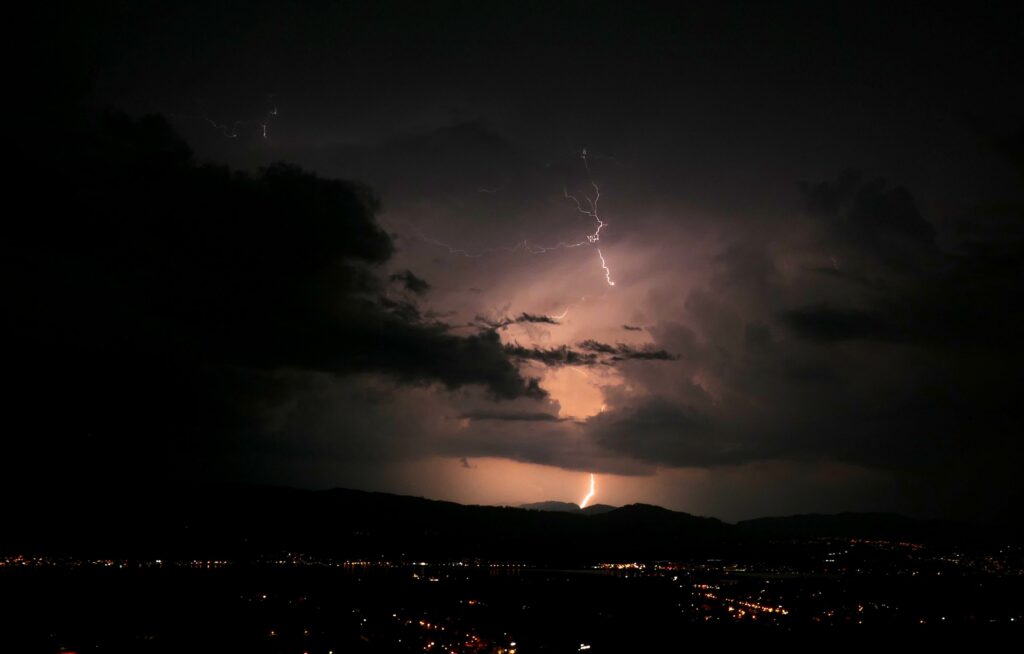 y cause arcing or overheating that leads to a fire.
Thunderstorm electrical damage can also create hidden problems that aren’t immediately noticeable. Damaged wiring or electrical components may continue to function while presenting a potential safety hazard.
If you notice smoke, a burning smell, sparks, or signs of scorching after a storm, don’t ignore them. If there is an active fire or immediate danger, leave the home and contact emergency services.
Once the situation is safe, have a qualified electrician inspect the electrical system before using affected equipment.
Storms Can Cause Electrical Damage Without Lightning
Lightning isn’t the only concern during a thunderstorm.
High winds can bring down trees and power lines, while heavy rain can cause flooding and water intrusion. Water-damaged electrical equipment can create serious shock and fire hazards.
If your home has experienced flooding or significant water intrusion, don’t assume the electrical system is safe simply because everything appears to be working.
Never touch downed power lines or electrical equipment that has been exposed to water. Contact the appropriate utility or emergency services, and have a qualified electrician evaluate affected electrical equipment before it is used.
Can Surge Protection Help Prevent Thunderstorm Electrical Damage?
Whole-home surge protection can provide an additional layer of protection for your home’s electrical system.
A surge protective device installed at the electrical panel can help limit harmful voltage surges entering your home’s electrical system. Additional point-of-use surge protection can also help protect individual electronics.
However, surge protection isn’t a guarantee against a direct lightning strike. No surge protection device can completely eliminate the risk of thunderstorm electrical damage.
If you’re interested in protecting your home, a qualified electrician can evaluate your electrical system and determine whether whole-home surge protection is appropriate.
What Should You Do After a Lightning Storm?
Once the storm has passed, take a quick look around your home for anything unusual.
Check for:
- Flickering or malfunctioning lights
- Tripped breakers
- Non-working outlets
- Damaged electronics
- Burning smells
- Scorch marks
- Buzzing or unusual electrical noises
- Appliances that suddenly aren’t working correctly
If something doesn’t seem right, don’t continue using it just to see whether it starts working again. Electrical damage can be hidden behind walls, inside outlets, or within your electrical panel.
If you suspect thunderstorm electrical damage, an electrical inspection can help identify problems and determine whether repairs are needed.
Protect Your Home Before the Next Storm
You can’t prevent thunderstorms or lightning, but you can take steps to reduce the potential for electrical damage.
Consider having your home’s electrical system inspected if it is older, you’ve experienced repeated electrical problems, or your home has recently experienced a major storm or lightning event.
Whole-home surge protection is another option worth discussing with a qualified electrician, particularly if your home contains expensive electronics, smart-home equipment, or other sensitive devices.
Taking action before the next storm can help reduce the potential for thunderstorm electrical damage and give you greater peace of mind.
Don’t Ignore Electrical Problems After a Storm
Thunderstorms may be a normal part of summer weather in the Kansas City area, but the electrical problems they leave behind shouldn’t be ignored. Lightning and power surges can affect everything from individual electronics to your home’s electrical panel and wiring.
If you suspect your home has experienced thunderstorm electrical damage, Jason Wright Electric can inspect your electrical system and help identify potential problems.
Your local concierge electrician is here to help keep your home safe before, during, and after storm season.