
Many homeowners rely on an outdoor extension cord to power patio lights, tools, or seasonal equipment. At first, it feels like a simple fix—plug it in and you’re done.
However, extension cords are not designed for permanent use. While they work well temporarily, they create safety risks when you leave them in place for weeks or months.
So before you run that cord across the yard again, here’s what you should know.
Extension Cords Are Meant for Temporary Use
First and foremost, manufacturers design extension cords for short-term needs. They do not replace permanent wiring.
When you use an outdoor extension cord long-term, you increase the risk of:
-
Fire hazards
-
Overheating
-
Electrical shock
-
Insulation breakdown
-
Code violations
In other words, what seems convenient today can become a serious problem later.
Why Long-Term Outdoor Use Is Risky
Outdoor conditions put constant stress on electrical equipment. Over time, that wear adds up.
1. Weather Causes Damage
Sunlight, rain, snow, and temperature swings all attack cord insulation. Even heavy-duty cords crack and deteriorate after prolonged exposure.
Once the outer jacket weakens, moisture can reach the wiring. As a result, the risk of shock and fire increases significantly.
2. Overloading Leads to Heat Buildup
Next, consider the power demand. Outdoor equipment often pulls more electricity than homeowners realize.
For example:
-
Space heaters
-
Pool pumps
-
Hot tubs
-
Power tools
-
Outdoor refrigerators
If the cord cannot handle the load, heat builds inside the cable. Over time, that heat damages the insulation and increases fire risk.
3. Physical Damage Happens Easily
In addition, cords stretched across decks or yards face constant wear. People walk on them. Lawn equipment rolls over them. Pets chew on them.
Eventually, small damage turns into exposed wiring. At that point, shock hazards become very real.
4. Electrical Code Does Not Allow It
The National Electrical Code does not allow extension cords to serve as permanent wiring.
So if you rely on an outdoor extension cord for a long-term solution, your setup likely violates code. That could create problems during a home inspection—or worse, after an insurance claim.
Are Outdoor-Rated Extension Cords Safer?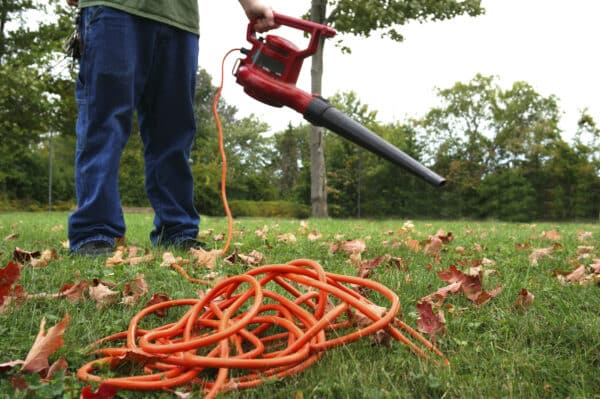
Outdoor-rated cords do offer better protection. They resist moisture and handle temperature changes better than indoor cords.
However, even outdoor-rated cords remain temporary solutions. They work well for short projects or seasonal use. They do not replace permanent outdoor wiring.
Think days or weeks—not months or years.
Better Alternatives to Long-Term Cord Use
If you constantly reach for an extension cord, your home likely needs additional outdoor power.
Fortunately, safer options exist.
✔ Install a Weatherproof Outdoor Outlet
An electrician can install a GFCI-protected exterior outlet with an in-use cover. As a result, you can plug in equipment safely year-round.
✔ Add a Dedicated Circuit
If you power high-demand equipment like a hot tub or pool system, you need a dedicated circuit. This protects both your equipment and your panel from overload.
✔ Install Permanent Outdoor Wiring
For sheds, patios, outdoor kitchens, or workshops, permanent wiring offers the safest and cleanest solution. It also improves convenience and boosts home value.
Warning Signs Your Setup Is Unsafe
Pay attention if you notice:
-
Warm cords
-
Cracked insulation
-
Frequently tripped breakers
-
Flickering equipment
-
Water near plug connections
These warning signs tell you your current setup needs attention.
When to Call an Electrician
You should contact a licensed electrician if:
-
You regularly use an outdoor extension cord
-
You power permanent equipment outside
-
You lack exterior outlets
-
You plan spring outdoor upgrades
An electrician can evaluate your panel, install proper GFCI protection, and create a safe, code-compliant solution.
The Bottom Line
An outdoor extension cord works well for temporary needs. However, it does not provide a safe long-term solution.
If you rely on one for ongoing outdoor power, now is the time to upgrade. A permanent installation keeps your home safer, cleaner, and fully up to code.
Convenience matters—but safety matters more.