
Your home electrical system is what powers everything from your lights and outlets to your appliances and devices. Understanding how a home electrical system works can help you troubleshoot minor issues, recognize warning signs, and know when to call a professional.
So, let’s break it down step by step in a simple, easy-to-follow way.
Where Power Comes From
First, electricity begins outside your home.
Your utility company delivers power through overhead or underground service lines. Then, that electricity enters your home through a meter, which tracks how much energy you use.
From there, power flows directly into your electrical panel.
The Electrical Panel (Breaker Box)
Your electrical panel is the control center of your home electrical system.
Inside the panel:
- Electricity is divided into individual circuits
- Each circuit is protected by a circuit breaker
- Breakers shut off power if a circuit becomes overloaded or a short circuit
If a breaker trips, it’s usually a sign that too much electricity is being used on one circuit or there’s a fault that needs attention.
Circuits: Distributing Power Throughout Your Home
Circuits carry electricity from the panel to different areas of your home.
There are two main types:
- General circuits: General use power to outlets and lighting
- Dedicated circuits: Serve large appliances like refrigerators, ovens, or HVAC systems
Because each circuit handles a specific load, overloading one can cause breakers to trip. In more serious cases, it can create a safety hazard or in more serious cases, it can create a fire hazard.
Wiring: The Path Electricity Follows
Wiring runs behind your walls, connecting the panel to outlets, switches, and fixtures.
A standard electrical cable contains:
- Hot wire (black or red): Carries electricity to devices
- Neutral wire (white): Returns electricity to the panel
- Ground wire (bare or green): Provides a safe path for electricity in case of a fault
Proper wiring is essential for both performance and safety.
Outlets and Switches
Outlets and switches are where you interact with your home electrical system daily.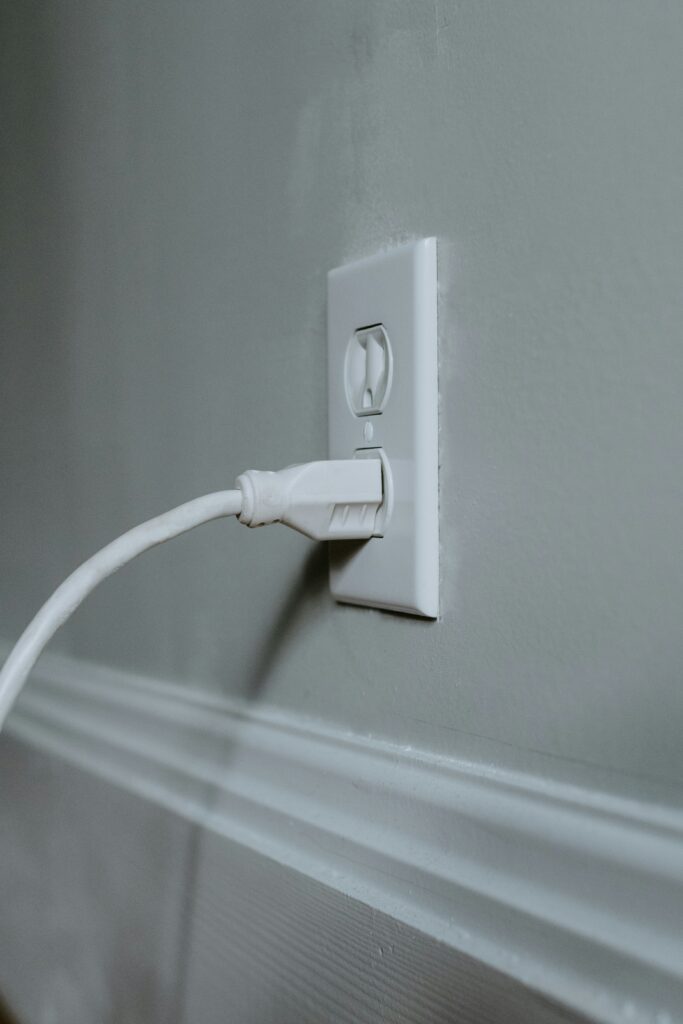
- Outlets provide power for devices and appliances
- Switches control lights and fixtures
Some outlets, like GFCI outlets, are designed to shut off power quickly in wet areas to prevent electrical shock.
How Electricity Flows
Here’s a simplified version of how electricity moves through your home:
- Power enters from the utility line
- It passes through the meter
- It reaches the electrical panel
- It’s distributed through circuits
- It flows through wiring to outlets, switches, and devices
- It returns to the panel through the neutral wire
This continuous loop allows your devices to operate safely and efficiently.
Safety Features Built In Your System
Modern home electrical systems include several safety protections:
- Circuit breakers: Prevent overloads and short circuits
- GFCI outlets: Protect against shock in wet areas
- Grounding systems: Redirect dangerous electrical currents
- Arc fault protection (AFCI): Detects dangerous wiring conditions that might cause a fire
These features work together to reduce the risk of electrical fires and injuries.
Signs Something Isn’t Working Properly
Even a well-designed home electrical system can develop issues over time.
Watch for:
- Frequently tripping breakers
- Flickering or dimming lights
- Burning smells or warm outlets
- Buzzing sounds from switches or walls
- Outlets that don’t work
- Outlets that are loose and do not hold the plug that is inserted firmly
If you notice any of these signs, it’s best to have a licensed electrician inspect your system.
When to Call a Professional
While understanding your system is helpful to quality of life, most electrical work should be left to professionals.
Call an electrician if:
- You’re upgrading your panel
- You need new circuits installed
- You’re remodeling your home
- You’re experiencing ongoing electrical issues
Professional work ensures your home stays safe and up to code.
Final Thoughts
Your home electrical system may seem complex, but it follows a simple path: power comes in, gets distributed, and safely returns. Knowing the basics can help you make smarter decisions, spot problems early, and keep your home running smoothly.
If you ever have questions or concerns about your system, a licensed electrician can provide guidance and ensure everything is working safely and efficiently.